 Study Go China
 Global Study Center

Saturday April 18, 2026
News Info
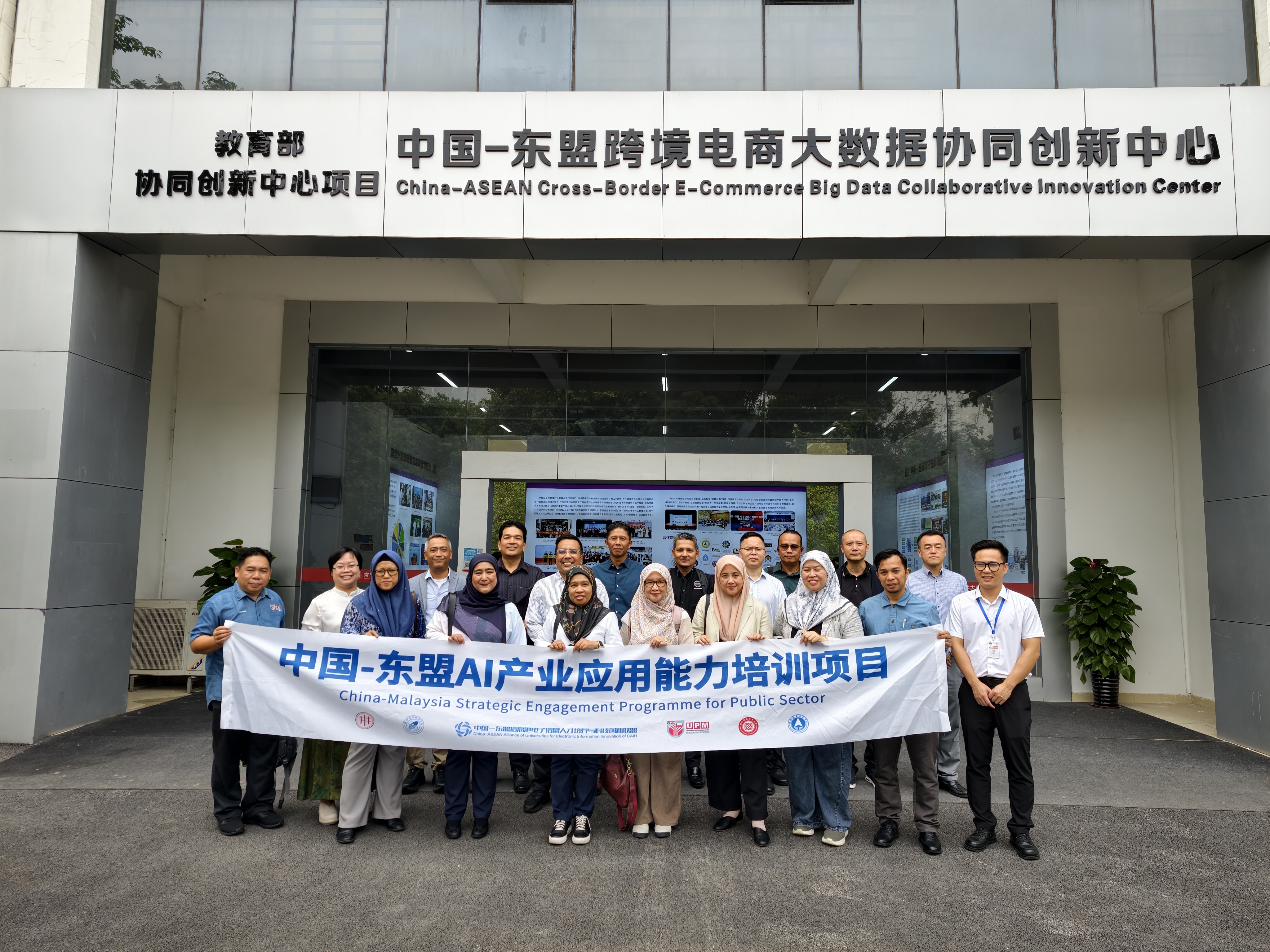
From 11 to 17 April 2026, the China-ASEAN AI Strategic Engagement Programme for Public Sector was successfully held in Guilin and Nanning, Guangxi, China. A 20-member Malaysian delegation comprising government officials, business representatives and researchers visited leading universities, key enterprises and industrial innovation platforms, taking part in thematic exchanges, site visits and business matchmaking activities.
The delegation included representatives from Malaysian government agencies, including the Ministry of Agriculture and Food Security and the Ministry of Domestic Trade and Cost of Living, together with representatives from the business and research sectors.
The programme not only established a foundation for long-term and stable cooperation, but also facilitated multiple cooperation intentions between Malaysian participants and Chinese government bodies and enterprises, helping advance China-ASEAN cooperation in artificial intelligence from “exchange and engagement” towards a new stage of “substantive implementation.”
With the establishment of long-term cooperation mechanisms and the promotion of practical project implementation as its core objectives, the programme developed an integrated cooperation model featuring “government guidance, enterprise leadership and research support.” By leveraging the complementary strengths of China and Malaysia, the programme promoted mutual empowerment and win-win cooperation.
Government, Industry and Academia: Three Clearly Defined Objectives
The Malaysian delegation arrived in China with clear objectives and practical cooperation needs, with distinct roles and focused priorities among the participating groups.
Government Representatives: Industry Standards, Policy and Strategic Planning
Government representatives from Malaysia, including officials from the Ministry of Agriculture and Food Security and the Ministry of Domestic Trade and Cost of Living, focused on China’s AI industry policies, development strategies, standards and governance frameworks.
Through exchanges with Chinese government bodies, universities, research institutions and enterprises, the delegation gained a deeper understanding of China’s development of artificial intelligence, including AI-enabled public services, smart agriculture, digital economy development, data governance, computing infrastructure and industry support policies.
The engagement aimed to explore opportunities for China-Malaysia cooperation in policy coordination, standards alignment, digital transformation and the application of AI in the public sector, while strengthening institutional foundations for broader China-ASEAN digital cooperation.
Business Representatives: Technology Solutions and Practical Project Development
The Malaysian business delegation adopted a strongly application-oriented approach, focusing on China’s mature AI solutions, technology products and application scenarios. Business discussions covered areas including smart agriculture, intelligent manufacturing, smart cities and digital marketing, with the aim of facilitating technology adoption, joint operations and practical project implementation.
These engagements were designed to address the actual needs of enterprises undergoing digital transformation and to identify commercially viable opportunities for China-Malaysia cooperation.
Research Institutions: Joint Development for ASEAN Needs
Malaysian researchers focused on practical applications and engaged in in-depth discussions with Chinese universities and laboratories. Together, they explored the development of AI technologies tailored to the ASEAN market and capable of addressing real-world challenges in the region.
The cooperation aims to promote joint research and development, technology commercialisation and talent development, ensuring that AI technologies are better adapted to ASEAN needs and contribute meaningfully to regional development.
In-Depth Visits: Strengthening the Foundation for Cooperation
The delegation carried out a series of thematic exchanges and site visits in Guilin and Nanning, covering the AI ecosystem from university research and enterprise innovation to industrial development platforms.
University Exchanges and Cooperation: Strengthening Technology and Talent Development
At Guilin University of Electronic Technology, the two sides held an exchange ceremony for the strategic cooperation agreement to jointly establish a China-ASEAN Artificial Intelligence Platform, followed by a thematic cooperation exchange session.
The delegation also attended presentations on “Artificial Intelligence and Innovation” and “Industrial Transformation and Development Policies,” visited key artificial intelligence laboratories, and explored opportunities for cross-border research cooperation and talent development.
At Guilin University of Aerospace Technology, the Malaysian delegation visited laboratories and observed an agricultural drone plant-protection project. During discussions on “Low-Altitude Economy + Artificial Intelligence,” participants explored cross-border applications of AI in areas such as smart agriculture, emergency response and low-altitude logistics.
(The delegation exchanging views with university representatives and representatives of low-altitude economy enterprises in Guilin)
At Nanning Vocational and Technical University, the delegation visited schools and departments covering intelligent engineering, artificial intelligence, smart cities and the digital economy. Discussions focused on vocational education, AI application-oriented talent development and the potential replication and promotion of the “Chinese Language + AI” vocational education model in ASEAN countries.
Enterprise Visits: Connecting Technology with Real-World Applications
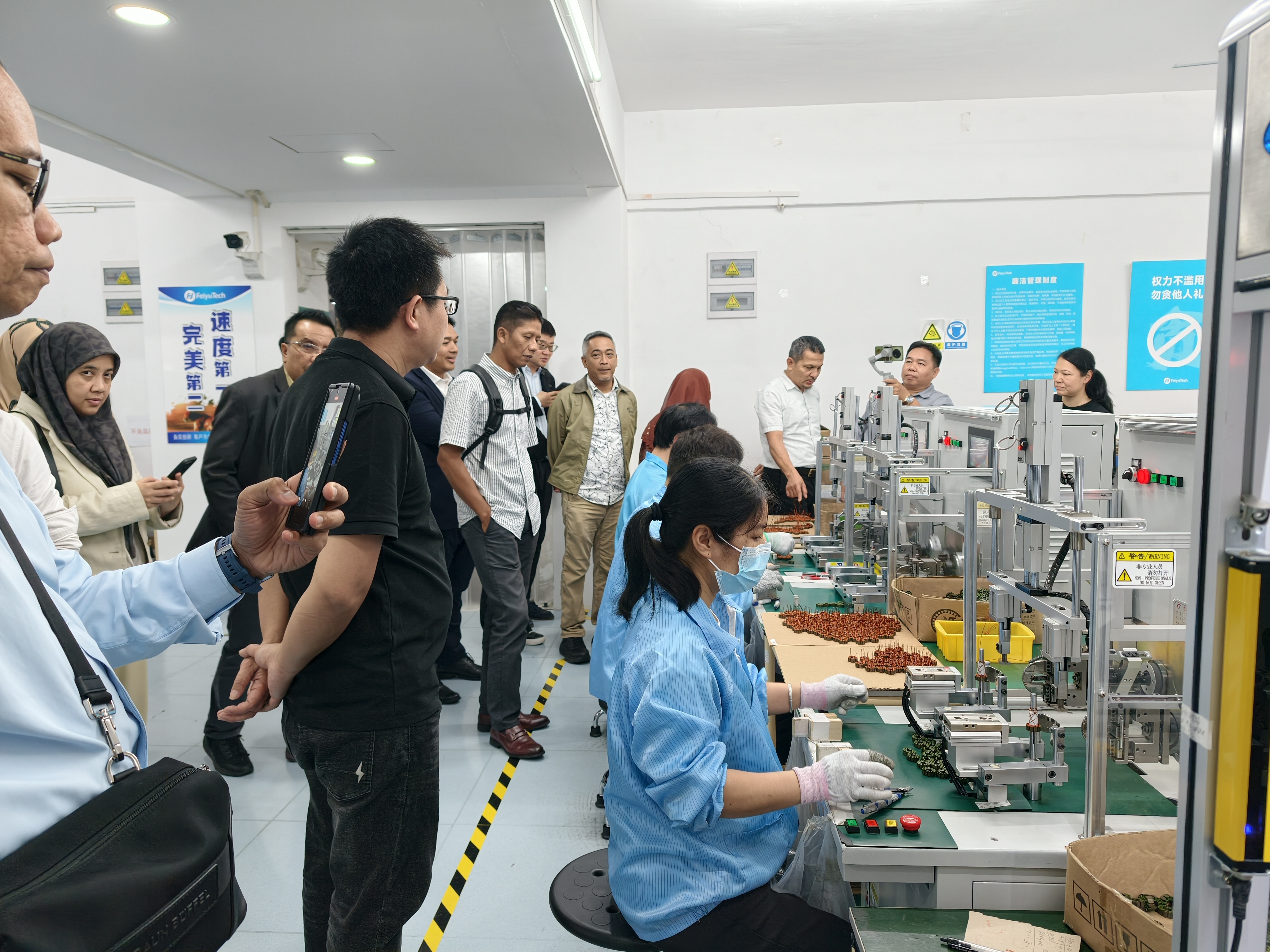
The delegation visited a number of leading enterprises, including Guilin Feiyu Technology Co., Ltd., Huangshi Group Headquarters, BYD FinDreams Battery, Runjian Group and Jierarun Technology Group Co., Ltd.
Through on-site visits, the delegation gained first-hand insights into mature applications of AI in intelligent manufacturing, smart agriculture, smart energy and computing services. Malaysian business representatives also conducted one-to-one business matchmaking sessions with Chinese enterprises, resulting in multiple cooperation intentions.
Industrial Platforms: Connecting with the Broader Innovation Ecosystem
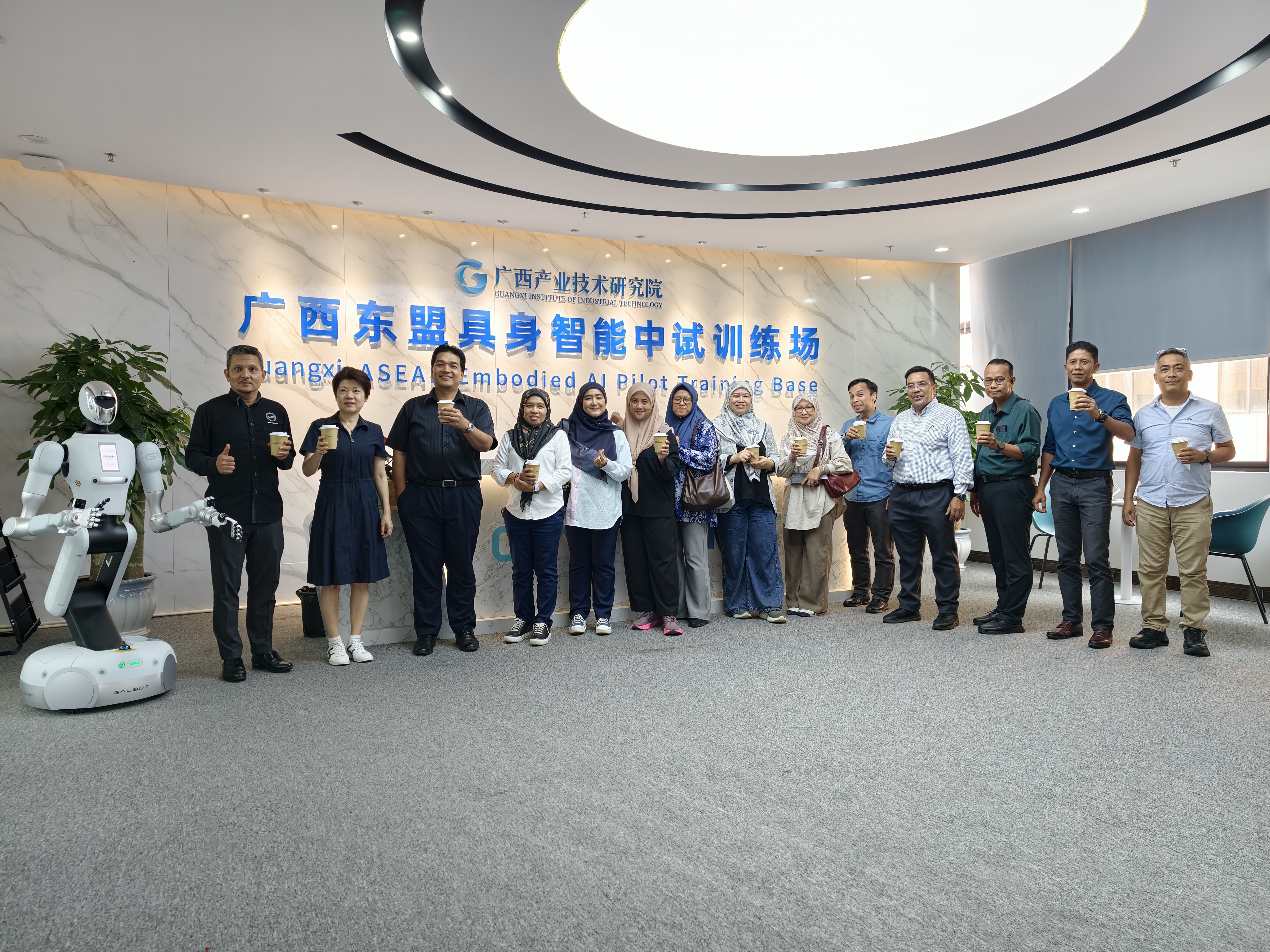
The delegation also visited platforms including the Guangxi Institute of Industrial Technology and the Zhongguancun Innovation Demonstration Park, where they explored advanced innovation facilities such as embodied-intelligence training centres, industrial research and innovation platforms, and intelligent manufacturing facilities.
These visits provided the delegation with a comprehensive understanding of Guangxi’s AI industry ecosystem, policy support and business services for cooperation with ASEAN, while establishing a stable platform for long-term China-ASEAN collaboration.
(The delegation visiting the Guangxi Institute of Industrial Technology)
(The delegation experiencing an embodied-intelligent robot training simulation)
2026 China-ASEAN AI Strategic Engagement Programme Continues
The successful completion of the Guangxi programme has further strengthened the framework for China-ASEAN cooperation in artificial intelligence and public-sector digital transformation.
To deepen cooperation and expand access to high-quality resources, we are actively planning the next series of programmes. The next China-ASEAN AI Strategic Engagement Programme is scheduled to take place in Shanghai and Suzhou in June 2026.
The upcoming programme will leverage the strengths of the Yangtze River Delta region, including its strong AI industry clusters, advanced technological innovation resources and diverse application scenarios. It will further enhance programme content, expand the scope of site visits and strengthen strategic engagement and business matchmaking, providing government, business and research representatives from ASEAN countries with a higher-quality platform for cooperation and development.